


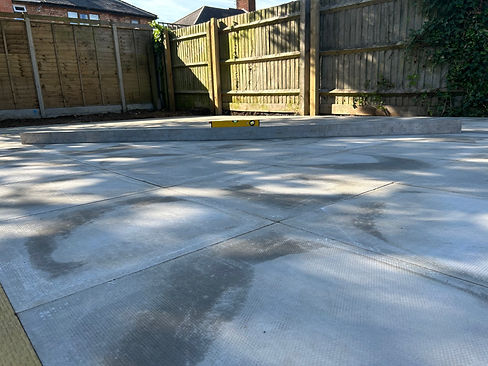
Paving Slabs
For best results:
The size of the base should be the same size of the building, and be made with 50mm thick concrete slabs. If you lay these onto hardcore with cement, your base will stay flat and level for years to come.
Alternatively:
You can lay cheaper quality slabs on a sand and cement mix, as this is a DIY job that most people can cope with. The down side with this is the long term possibility that moles and other wildlife burrow under the slabs and make the base unlevel over time.
TIP:
Don't use riven paving slabs, as the uneven pattern on the top will cause your shed floor to wobble.
Concrete Pad
For best results:
Concrete is the best way forward for longevity, however it usually means that a local tradesman needs to be hired. It is also the most expensive option, however the old adage of getting what you pay for generally stacks up with the groundwork too.
Alternatively:
You may have an existing base that is unlevel, but realise that something needs to be done before the building arrives. If this is your situation, then the best way forward is to add a level top layer to the base with a 50mm concrete skim.
TIP:
We recommend using a builder for a concrete pad, as they will organise a skip for soil removal, have the correct equipment and contacts for the materials.


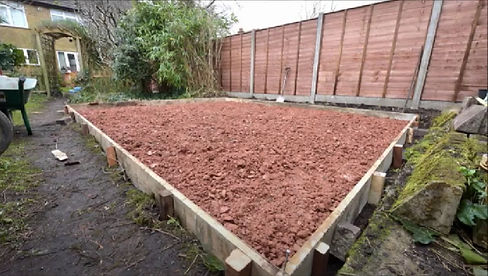
Crushed Hardcore
For best results:
The hardcore needs to be small aggregate so that it binds well together. Removing the topsoil is required, and the hardcore needs to be compressed with a vibrating whacker plate.
Alternatively:
You could use an existing shale, or pea gravel area. This is usually strong enough for a garden shed and is easy to get level on the day. Long term you may find that the base becomes unlevel, and the door shifts out of line, making it difficult to open and close.
TIP:
Create a frame with shuttering (timber planks) to the size of the shed, to keep the crushed hardcore inside the 'box'.
Wooden / Composite Base
For best results:
Make sure that the wooden platform is flat, smooth and level. Either tanalised timbers or composite decking will work well, especially if the boards are above ground level.
Alternatively:
You could use timber bearers or a plastic shed base system, however they are close to ground level and the possibility of the floor rotting in this scenario is quite high. And once the floor rots - you have t start again with a new shed!
TIP:
If using an existing timber base, it would make sense to treat the area with either a wood paint of a wood stain before the new shed arrives.

Shed Base Case Study
The original 7x7 garden shed needed replacing with a newer model, so the customer gave us a call to find out how we could help. Here was the step by step guide.
Step 1. The customer emptied the old shed.
Step 2. We dismantled the existing shed and took it away from site
Step 3. We removed the existing slab base and replaced with a new paving slab base.
Step 4. The building was supplied and fitted by the team.

The Original Shed

The New Base

The New 7' x 7' Shed
